
Impact of Advertising on the Belgian Economy

In this study, Ortelius examines the current impact of advertising on the Belgian economy and society, using econometric models, the in-house Ecosystem Impact Tool, and an extensive literature review. The aim is not only to quantify advertising’s contribution, but also to gain a better understanding of the social functions it fulfils today. With international examples, the study highlights opportunities to reinforce the Belgian advertising ecosystem. Finally, eight actionable recommendations are formulated. The study was carried out on behalf of the “Raad voor Reclame”.
Vlaamse industrievisie 2030

De industrievisie is een studie waarin beleidsmaatregelen worden voorgesteld om de Vlaamse energie-intensieve industrie extra ademruimte te geven richting 2030. Met andere woorden: hoe kunnen we de competitiviteit van de industrie versterken, en tegelijk onze klimaatambities waarmaken. In de studie worden de maatregelen ondergebracht onder 5 ankerpunten: financiering van de transitie door extra ETS1-middelen, welke infrastructuur bouwen we prioritair, een visie op onze energievoorziening, hoe kunnen we de O&O-basis van de industrie versterken, en tot slot over welke partnerships met andere landen beloftevol kunnen zijn en waarom.
Critical Raw Materials
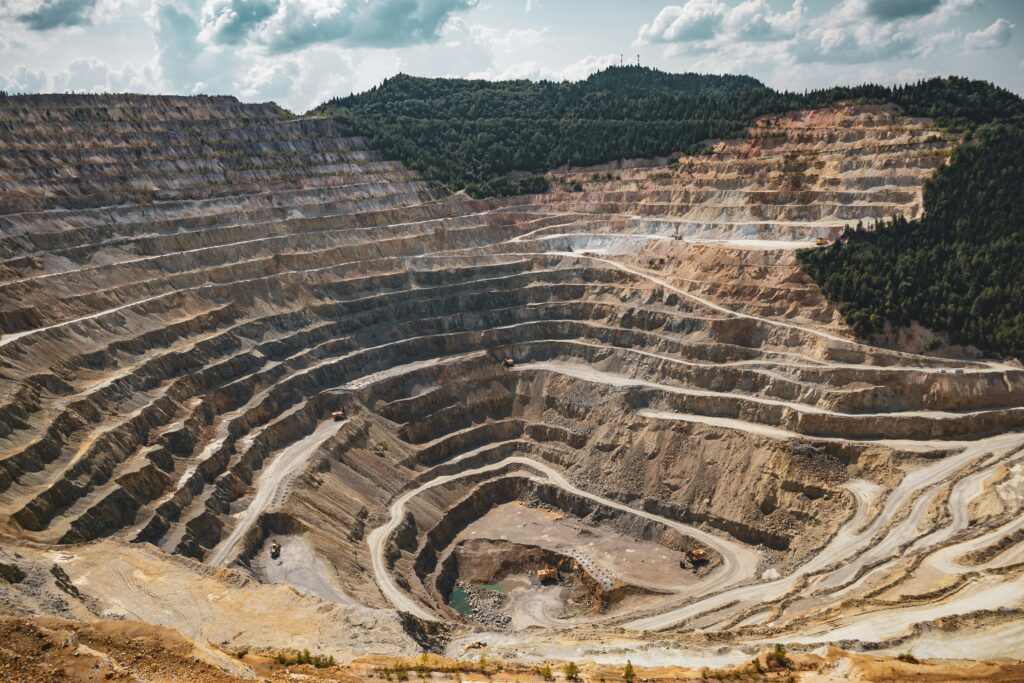
The key finding? Even in the most optimistic scenarios — factoring in demand reduction, recycling, increased EU mining, and robust international partnerships — the EU’s vulnerable supply of critical battery metals will still double by 2040.
This has far-reaching implications for the EU’s ability to deliver on its energy transition, support a credible and autonomous defense policy, and reduce its strategic dependence on unstable or concentrated supply chains.
North-C-Neutral

North-C-Neutral is a spatial optimization project for the North Sea. It aims to provide answers on which technologies should be placed offshore and where. This includes renewable energy technologies like offshore wind, floating solar and many more. Aquaculture, fishery, shipping lanes and several other daily activities set at sea are incorporated into this optimization from the get-go. But what is ‘optimal’ for our Sea?
Coastal Vision 2100

Sea levels are rising due to climate warming. That is why the Flemish government is implementing the Coastal Safety Master Plan today to protect against flooding from the sea until 2050. The Coastal Vision project looks further. Indeed, during this co-creation research project various possibilities were sought to continue protecting our coast from various levels of sea level rise up to and including the year 2100.
Founder of the Blue Cluster

Ortelius was a co-initiator and coordinator in establishing the Blue Cluster, a spearhead cluster dedicated to fostering cross-sector partnerships and enhancing collaboration among private companies, knowledge centers, and government institutions within the blue economy. This cluster focuses on key sectors—such as fisheries, maritime transport, renewable ocean energy, coastal tourism, and marine biotechnology—with the aim of developing innovative projects and investments that address global challenges. Ortelius contributed to crafting the innovation roadmaps that serve as the strategic foundation for the cluster, guiding and prioritizing its activities, investments, and partnerships. Since gaining official recognition, the Blue Cluster has driven significant new investments and launched a range of innovative projects in the Belgian North Sea.
CASSANDRA

The CASSANDRA consortium aims to place a Living Lab on the Belgian coast that integrates various Nature-based solutions with the goal of unifying coastal protection and coastal management. The lab will serve as a research lab to monitor the benefits and functionalities of nature-based solutions. In the current feasibility study, Ortelius investigated the economic and financial feasibility of the living lab, looking very broadly at how nature-based solutions can be valorized in the future.
Authorship of ‘The Climate Shock’

This book, authored by Geert Noels, Kristof Eggermont, and Yanaika Denoyelle, quantifies 20 climate solutions that enable significant reductions in Belgian CO2 emissions by 2030. It is the result of extensive consultations with Belgian captains of industry, civic organizations, and policy officials.
Lecture series ‘The Climate Shock’
Our team regularly delivers lectures on topics within our economic expertise, tailored to meet the interests and needs of diverse audiences. One of our recent series focused on the “Climate Shock,” where we engaged in dialogues with various sectors, government representatives, and the public. Each lecture was adapted to fit the specific audience and organization, fostering meaningful conversations on climate action across different perspectives. In addition to climate, we also offer lectures on our other areas of expertise, always approached from an economic perspective. For those interested, please feel free to reach out, and we would be happy to discuss options that suit your audience and objectives.
Energy island off the Belgian coast

In 2018, Ortelius worked as exclusive economic-financial advisor in a consortium investigating the financial feasibility of an energy island off the Belgian coast. The feasibility study assumes a combination of innovative techniques for energy generation and storage on an artificial island. Such an island was already recognized by the European Commission in 2017 as a Project of Common Interest, PCI, confirming its importance. The focus of the feasibility study was on all energy-related activities and potential cost reductions and aims to contribute significantly to the energy transition in the coming years. Following the positive conclusions of the ETF-funded feasibility study, Ortelius was appointed as economic and financial advisor in developing the concrete business case of the energy island. No download is available of this project.