As electric vehicles rise to tackle the challenge of decarbonizing the transportation sector, range anxiety continuous to be one of the key bottlenecks of the technology. As with any transition, different technologies are lurking that may offer a solution, one of them being dynamic inductive charging, a technology that could allow our battery to charge while driving…
Transport Emissions in Belgium
In Belgium, the transportation sector accounts for 22% of our national greenhouse gas emissions. Two thirds of our country’s fleet consist of passenger cars, which are responsible for 54% of these emissions. Trucks and busses are only 16% of our fleet, yet they are responsible to 41% of our transport emissions, emphasizing the need to decarbonize heavy vehicles as well.
A key solution for decarbonizing transport is electrifying our fleet. With the current Belgian grid, the footprint of electric vehicles over the whole lifecycle is over three times lower than their fossil equivalents, and the impact continues to reduce as grids get cleaner.
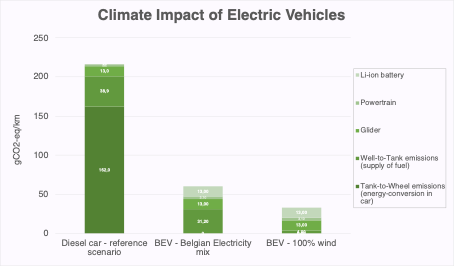
Figure 1: Source: De Klimaatschok by Geert Noels, Kristof Eggermont and Yanaika Denoyelle based on Messagie, M. (2021). Life Cycle Analysis of the Climate Impact of Electric Vehicles
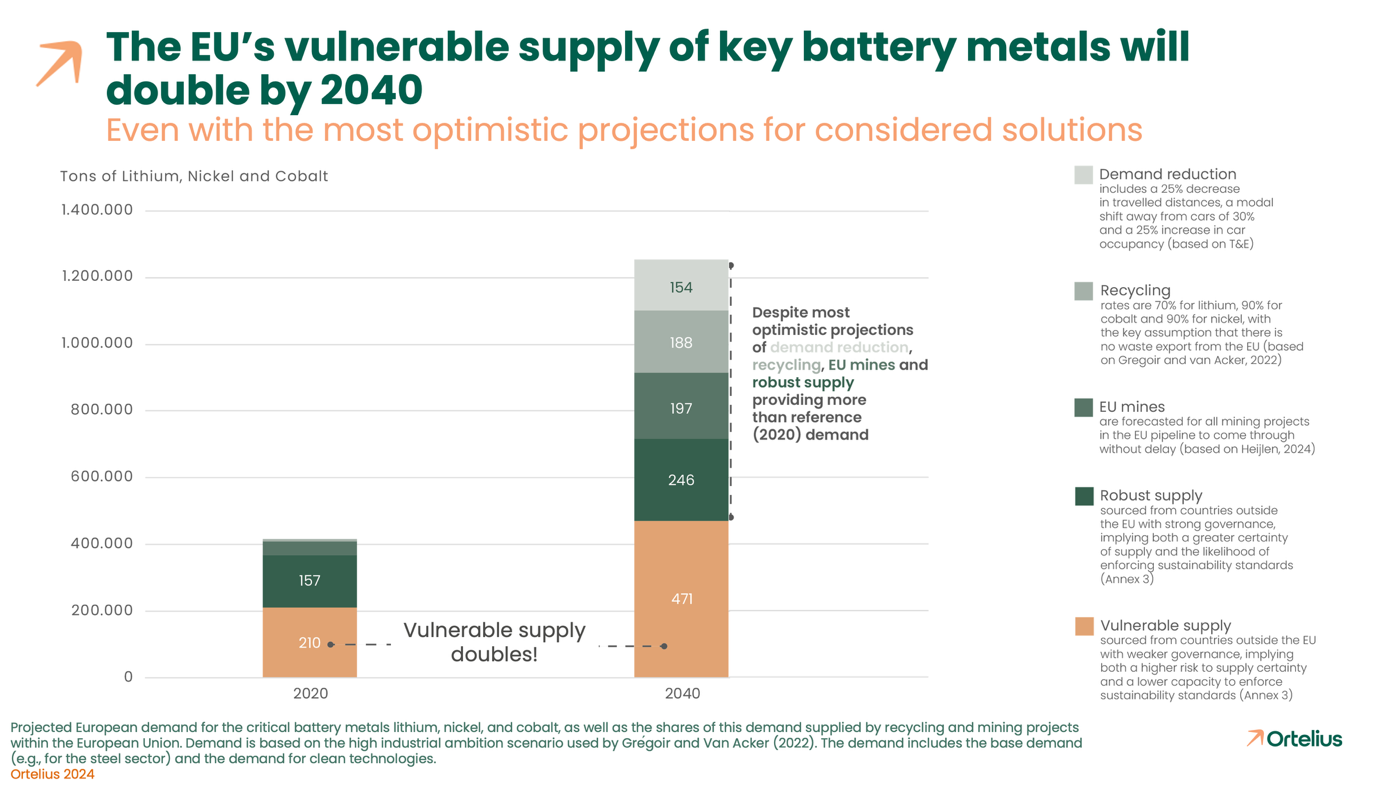
Nevertheless, electric driving comes with its downsides, such as access to charging infrastructure, range anxiety, cost, and supply of critical materials for large scale production of batteries. Key concerns from buyers are visualized in the graph below. A dream solution to a few of these challenges would be being able to wirelessly charge our vehicle on-the-go.
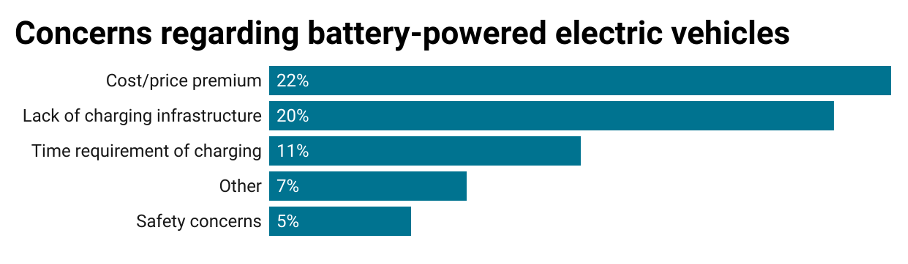
Figure 2: Source: Deloitte 2018
The idea behind dynamic wireless charging
Imagine key highways between cities and countries being adapted so that electric vehicles charge while driving. This way range improves dramatically and driving for a holiday in the south of France with an EV becomes a lot more attractive. Implementing this technology in busy trade routes can be a gamechanger for heavy vehicles as well. Trucks transporting goods are facing the same challenges regarding range anxiety and high costs but these concerns magnified: due to their weight these trucks need significantly bigger batteries, which take longer to charge. If, however, trucks are charged on route, the required battery size reduces. The battery, in turn, is a significant part of the cost of a vehicle: about 30-40% of the cost of an EV is the battery. A final benefit is that charging while driving can reduce peak electricity consumption. Generally, we charge our vehicle once we return from work, which is also when we typically turn on our dishwasher or put in some laundry. By charging on-the-go this peak can be more evenly distributed throughout the day, reducing pressure on our grid.
How does inductive charging work?
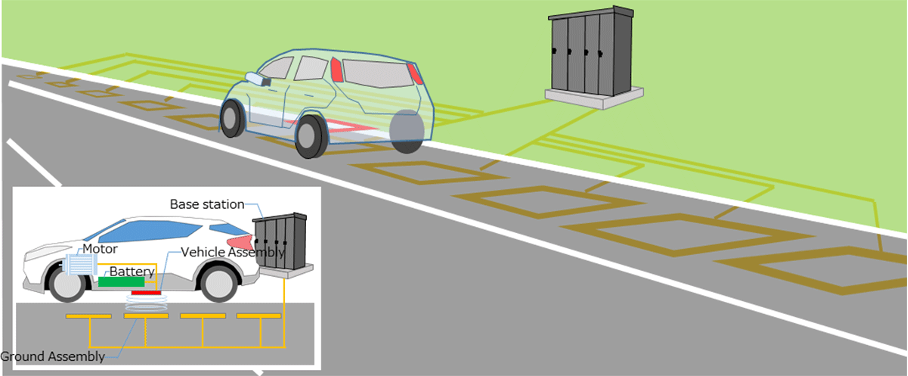
Dynamic inductive power transfer systems, or DIPT, is a possible solution to vastly increase electric vehicle range by embedding mechanisms in the road that wirelessly charge your battery when you drive over them. The technology works similarly to wireless phone chargers, just a tad more complex. Transmitters connected to a power source are embedded into a lane and a pad attached to your vehicle receives energy while driving over these transmitters.
Figure 3: Source: Toyota
In essence, electricity runs through the transmitters powered by a base station. In the transmitter, the electricity generates magnetic fields, which transfer this power to the receiving pad, which is connected to the battery.
Is inductive charging safe?
Wireless charging makes use of electromagnetic fields, clearly the scale and the power of these fields is larger than is the case for, for example, phone chargers. It is then important to study the safety for passengers and wildlife nearby.
Around the world, rigorous standards are already in place to determine safe boundaries on field densities, one of which being the International Commission on Non-Ionizing Radiation Protection. Dynamic inductive charging has been tested and shown to keep within this safe boundary, amongst others by Flanders Drive (now Flanders Make).
One key component to ensure this safety is the shield that is positioned above the receiver pad, this shield can work in different ways. The passive shield works like a screen that essentially makes the radiation “bounce back” to the receiver pad, thereby increasing the efficiency of the power transfer and ensuring safety for passengers. Active (and reactive) shields work similar to noise-cancelling headphones, they intentionally produce opposing fields to the ones being received, which cancels them out.
What’s the downside?
As is the case with most new things, there are some key bottlenecks slowing down the growth of on-the-go inductive charging.
First, to achieve high efficiencies it is important for the receiver pad on the vehicle to be perfectly aligned with the transmitter on the road. Especially at high speeds (>70 km) this requires a lot of concentration from the driver. Automation can be a gamechanger for addressing challenge, where the car adjusts its position for optimal alignment. Similar features, for example automated steering to keep within a lane, are already present in commercial cars. Furthermore, the distance of the air gap between the receiver and transmitter pad should be kept to a minimum to prevent losses of energy. This raises the question: how does the efficiency of dynamic inductive charging compare to conventional plug-in charging? A typical level 2 charger you may have at home transfers about 83-94% of the energy from the grid to the battery. Inductive stationarycharging- where the car charges through induction while parked– achieves similar efficiencies[1]. Now onto dynamic inductive systems: The FABRIC pilot project that ran between 2014 and 2017 expects efficiencies between 80 and 90% are achievable. More recently, the Arena Del Futuro project in Italy tested a 1-kilometer loop and claimed it could achieve efficiencies that match fast chargers. In the research done by Flanders Make, efficiencies of over 90% were reported, both for a passenger car and a bus.

The second bottleneck is, of course, the cost. On-the-go wireless charging requires significant interventions in infrastructure, as the coils will need to be imbedded into roads. As such, the technology comes with a high cost. Current estimates place the cost at a minimum and maximum of respectively 0,4 and 2,7 million euros per kilometer. That means an electrified road from Brussels to the Provence would cost between 400 and 2700 million euros.
As of yet, little to no electrical vehicles are equipped with receiver pads, making retrofitting a necessity. It is likely though, that this will change for newer vehicles, as wireless charging while parked requires receiver pads as well, and this technology is gaining traction.
A lot of the gains will be found in smart planning, a Swedish study[2] found that electrifying 25% of its roads, specifically the busiest routes, could reduce needed battery size with 33% at best. This reduction in battery costs could even offset the cost of implementation the electrified roads for users.
The future of on-the-go charging?
Companies including Volvo, Toyota and Stellantis are active in this upcoming technology. Quite a few countries have or are experimenting with this technology, including Belgium, the US, and most noticeable Sweden. Sweden believes this technology will be key to decarbonizing trucks and busses. By 2026, a 21-kilometer stretch of motorway will be permanently electrified, and if successful it may be expanded to 3.000 km by 2035.
Time will tell if this technology can become an economically competitive addition to electric driving. It is clear, though, that innovative solutions like this will play a key role in the climate transition. Today, we’re only at the beginning of the path to net-zero, and it is hard to imagine just how much innovative clean technologies will improve climate solutions like electric vehicles and accelerate the sustainable transition. Of course, we can’t just rely on technology to reach net-zero, but in technologies lie interesting opportunities for businesses and countries to pioneer clean solutions and use the transition to create ecological, economic, and social welfare.
[1] Mohamed, Ahmed AS, et al. “A comprehensive overview of inductive pad in electric vehicles stationary charging.” Applied Energy 262 (2020): 114584.
[2] Shoman, Wasim, Sten Karlsson, and Sonia Yeh. “Benefits of an Electric Road System for Battery Electric Vehicles.” World Electric Vehicle Journal 13.11 (2022): 197.