As the digital age advances, the demand for data centers to store and process large amounts of information is skyrocketing, driven by tech giants. These data centers, which power everything from cloud computing to AI, require significant amounts of electricity to function, and their energy consumption is projected to grow substantially. Currently, data centers consume approximately 1-1.3% of global electricity, excluding additional uses like data networks and cryptocurrency mining. While this percentage seems modest, the rapid pace of digital transformation suggests that the energy demand of data centers will continue to increase.
According to the International Energy Agency (IEA), electricity consumption from data centers could double between 2022 and 2026, reaching 1,000 terawatt-hours (TWh)—roughly equivalent to the total electricity use of Japan. Despite this dramatic increase, data centers will still account for only a small portion of global electricity demand growth by 2030. In the IEA’s World Energy Outlook 2024, global electricity demand is projected to rise by 6,760 TWh between 2023 and 2030, largely driven by electrification in sectors like transport, industrial processes, and heating/cooling[1]. This means that while data centers are requiring more electricity, they remain a relatively minor factor in the overall increase in electricity demand.

Nuclear Energy & SMRs: Big Tech’s Green Ambition
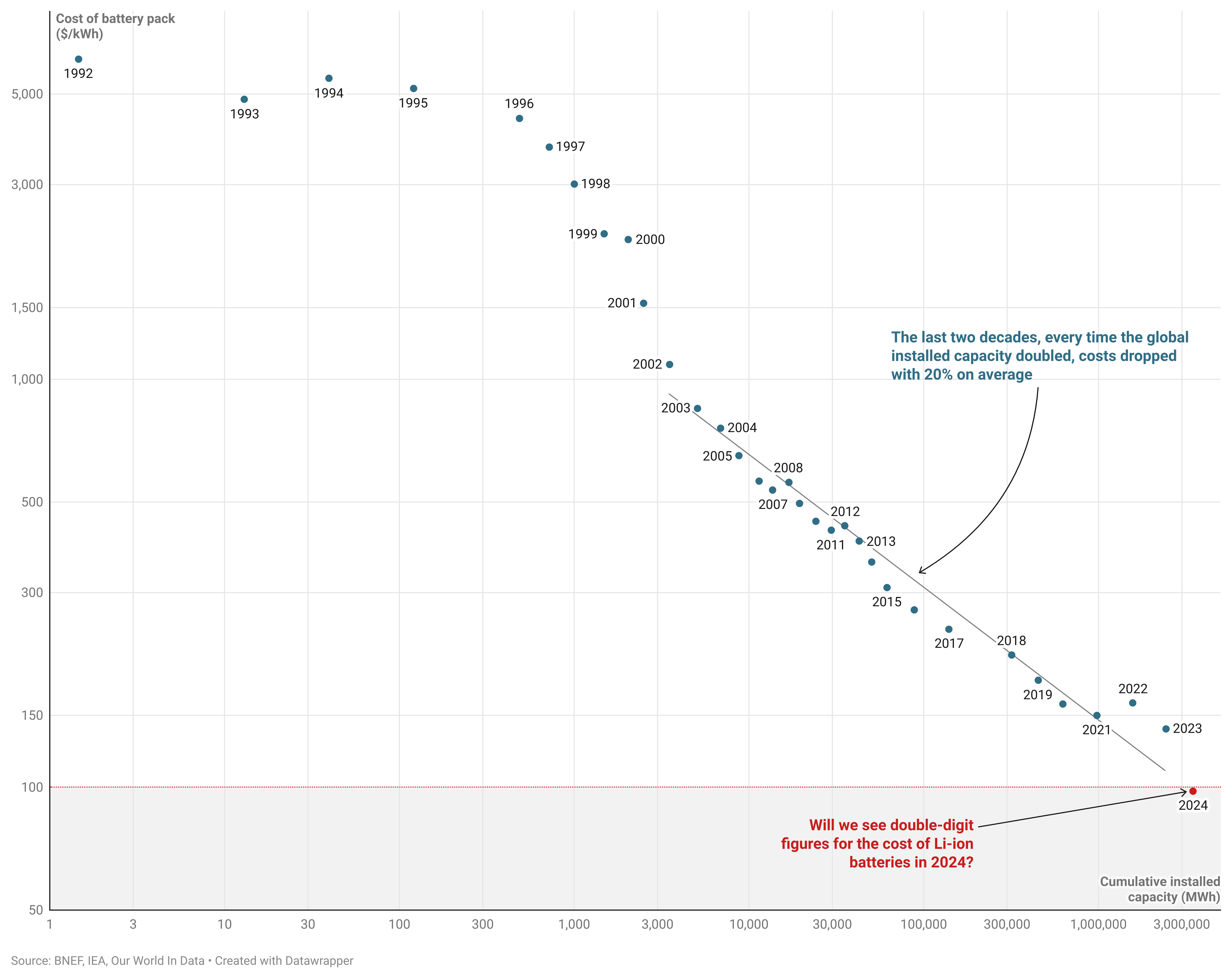
To meet the rising demand for carbon neutral energy, big tech is exploring nuclear energy and more specifically, Small Modular Reactors (SMRs). Companies like Google, Microsoft, and Amazon have already announced investments in nuclear technology[3]. The interest in SMRs from big tech offers several potential benefits. With their substantial financial resources, these companies are well-positioned to fund “first-of-a-kind” (FOAK) SMR projects. FOAK SMRs are typically more expensive due to the costs associated with new technology development. However, once these initial projects are completed, subsequent “nth-of-a-kind” (NOAK) SMRs could see significant cost reductions, making them more accessible for other industries. In this way, big tech’s early investment could accelerate the adoption of SMRs, helping to drive down costs and making nuclear energy more viable on a global scale.
Challenges and Considerations
While the idea of big tech taking the lead in nuclear energy is promising, it also raises several challenges. For one, the massive investment in nuclear energy may not be entirely driven by a belief in the technology’s potential but rather by their increasing energy needs. Additionally, the SMR technology is still in its early stages, and regulatory hurdles, public acceptance, and long-term nuclear waste concerns remain uncertain. It’s important to note that big tech investments in nuclear energy for data centers aren’t necessarily the best or only solution. Building out the nuclear infrastructure to meet these energy demands requires robust electricity grids capable of transmitting large amounts of power efficiently. However, this grid expansion is costly and complex, raising questions about whether there are better alternatives.
One such alternative is reducing electricity consumption in data centers through innovative technologies. Advances in cooling methods, such as liquid cooling or using natural environments to cool servers, can drastically cut electricity use. Furthermore, techniques like reinforcement learning can optimize data center operations, reducing the need for excessive electricity. Edge AI, which processes data closer to the source rather than in centralized data centers, is another promising approach that can lower the energy demands of data-intensive tasks. By exploring these innovations, tech companies may be able to reduce their electricity needs, reducing their environmental impact without overwhelming the electricity grids.
A Future-Forward Approach
In conclusion, while data centers will undoubtedly boost electricity demand, they represent only a fraction of the broader energy landscape. Big tech’s interest in nuclear and SMRs could accelerate the green transition by helping to lower costs and making nuclear energy more accessible to other sectors. Yet, the focus on nuclear energy should not overshadow other innovative approaches that could mitigate the energy demand from data centers. For more insights into how your business can adapt to these shifts, feel free to connect with our team of experts.
[1] https://www.iea.org/reports/world-energy-outlook-2024/executive-summary
[2] https://www.iea.org/data-and-statistics/charts/global-growth-in-final-electricity-demand-by-use-in-the-stated-policies-scenario-2023-2030
[3] https://www.tijd.be/dossiers/de-verdieping/big-tech-is-op-energiejacht-om-hongerige-ai-s-te-voeden/10570493.html