In the fight against climate change, the electrification of energy consumption has emerged as a pivotal transition towards reaching ambitious net-zero goals. This transformation not only spurs greater demand for advanced energy generation technologies but also places a significant emphasis on upgrading and expanding the essential grid infrastructure responsible for transporting electrons to demand centers.
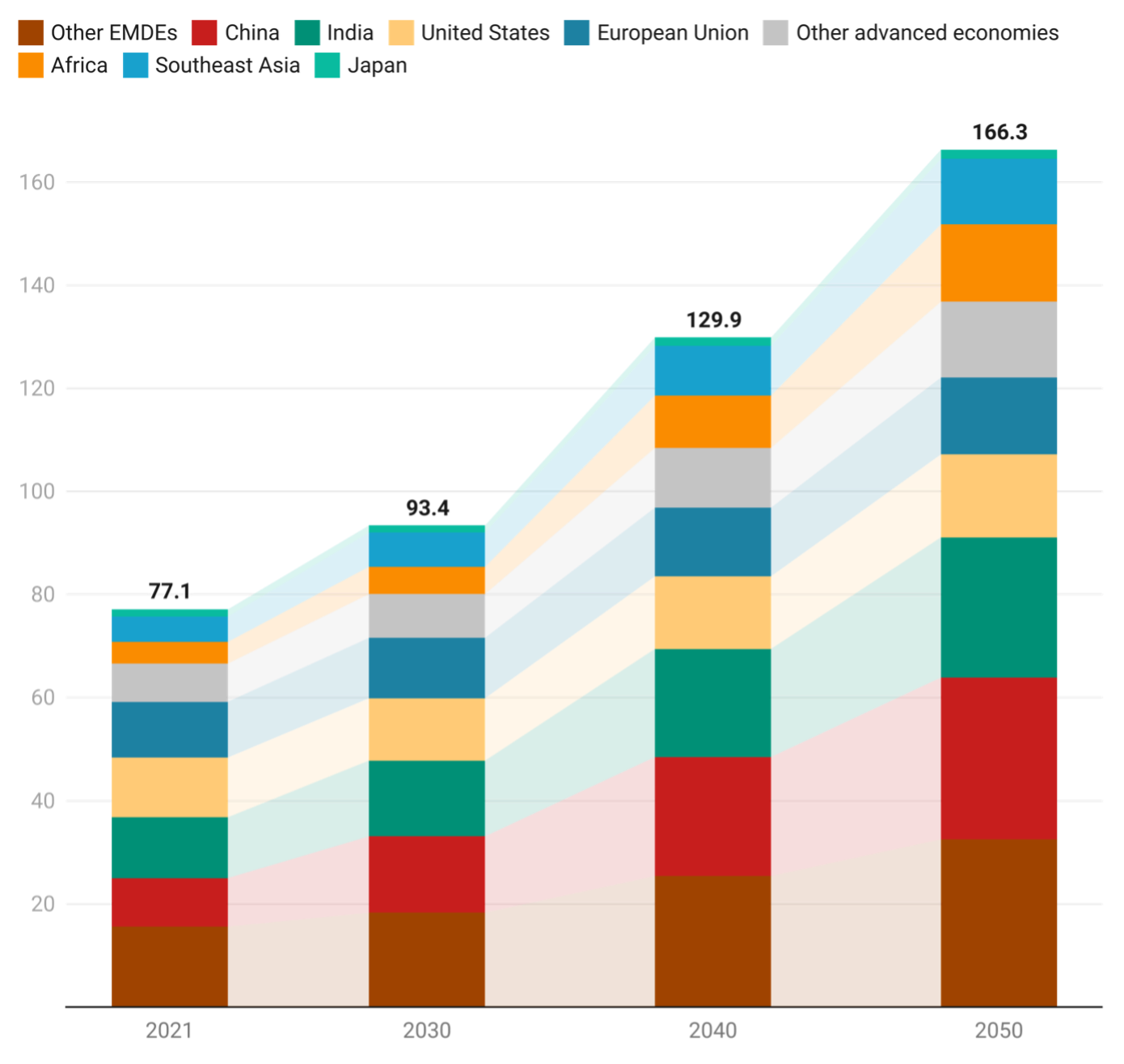
Electricity grids can be likened to the extensive network of highways required for the efficient transportation of electricity from its source of generation to the end-users. This vast network can be broadly divided into two key components: the transmission grid and the distribution grid. The transmission grid, characterized by high voltage, can be compared to the “highway” for electron transport. In contrast, the distribution grid serves as the regional roads, facilitating the final delivery to households and businesses. As illustrated in the accompanying figure, the global electricity grid is an impressive feat of engineering, with a combined length of nearly 80 million kilometers. To put this monumental achievement into perspective, this grid length equates to circumnavigating the Earth 2,000 times or making 100 round trips to the Moon.
Projections for the total grid length under the Announced Pledges Scenario (Mln km)
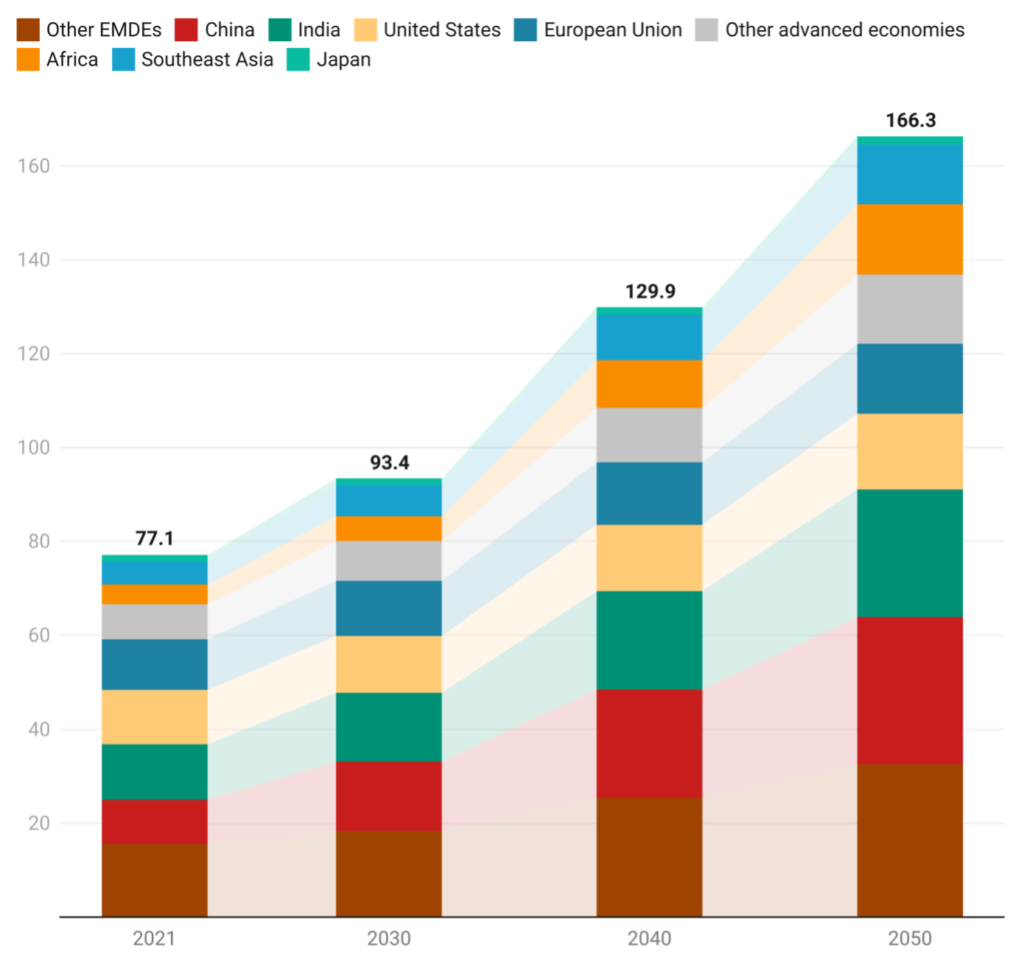
Figure 1: Figure by Econopolis Strategy, data from IEA
This remarkable grid infrastructure serves as the lifeline for our increasingly electrified world. Despite its vast expanse, the existing electricity grid faces unprecedented challenges due to the accelerating energy transition. To meet the higher demand for electric energy and accommodate the shift towards cleaner sources of power, the grid requires substantial investments. Under the Announced Pledges scenario[1], the grid length must more than double to 166 million kilometers by 2050.
Who will pay for this backbone?
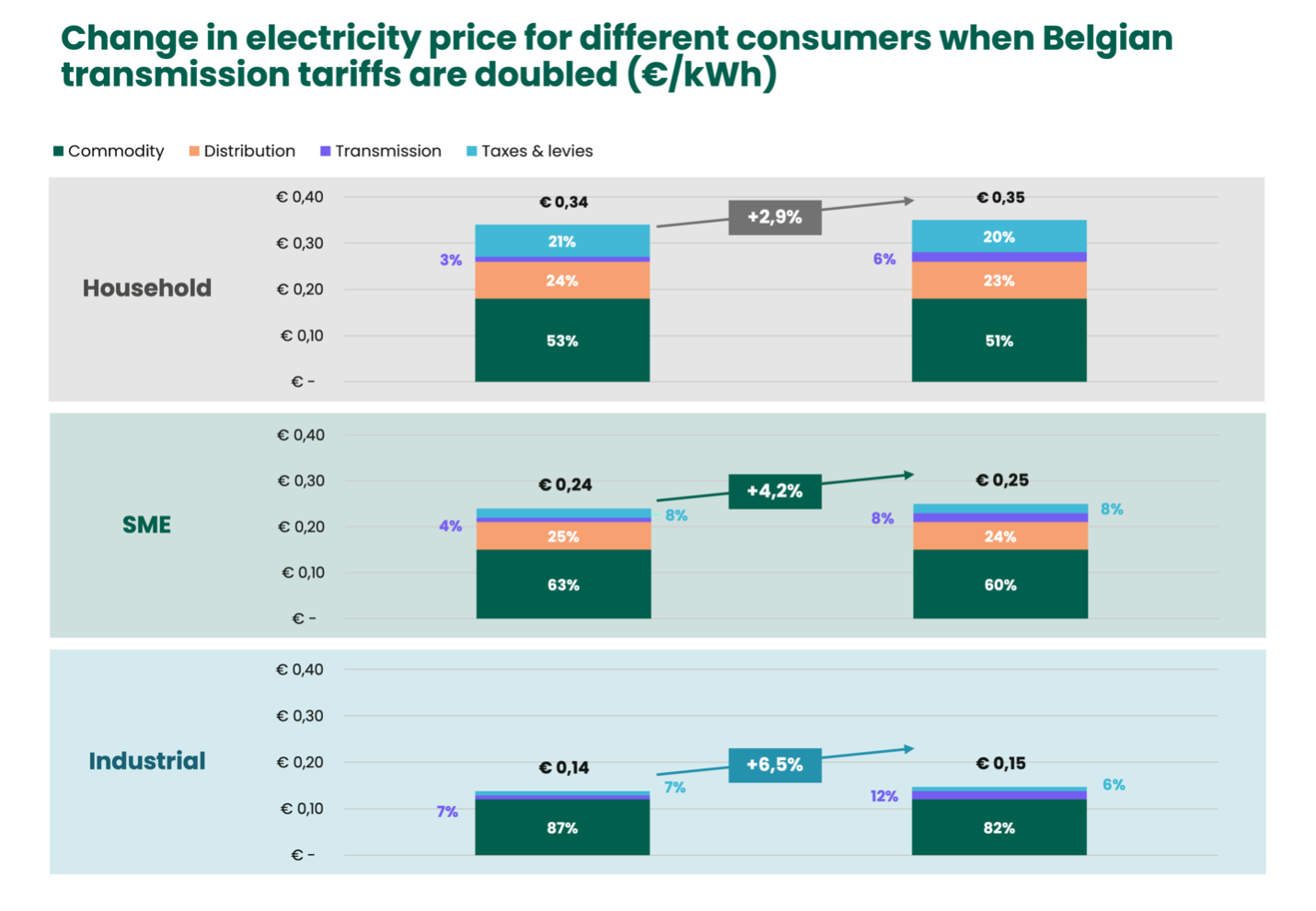
These substantial investments will inevitably impact the energy bills of households, as grid operators fund the necessary repairs, maintenance, and expansions through consumer tariffs. It’s worth noting that Belgium tops the global charts for electricity transmission and distribution costs, measured in $/MWh. A portion of this cost stems from historical policies that rewarded solar panel installations with green certificates, the expenses of which are recouped through an additional charge imposed by distribution system operators.
Composition of the energy bill for household consumers ($/MWh)
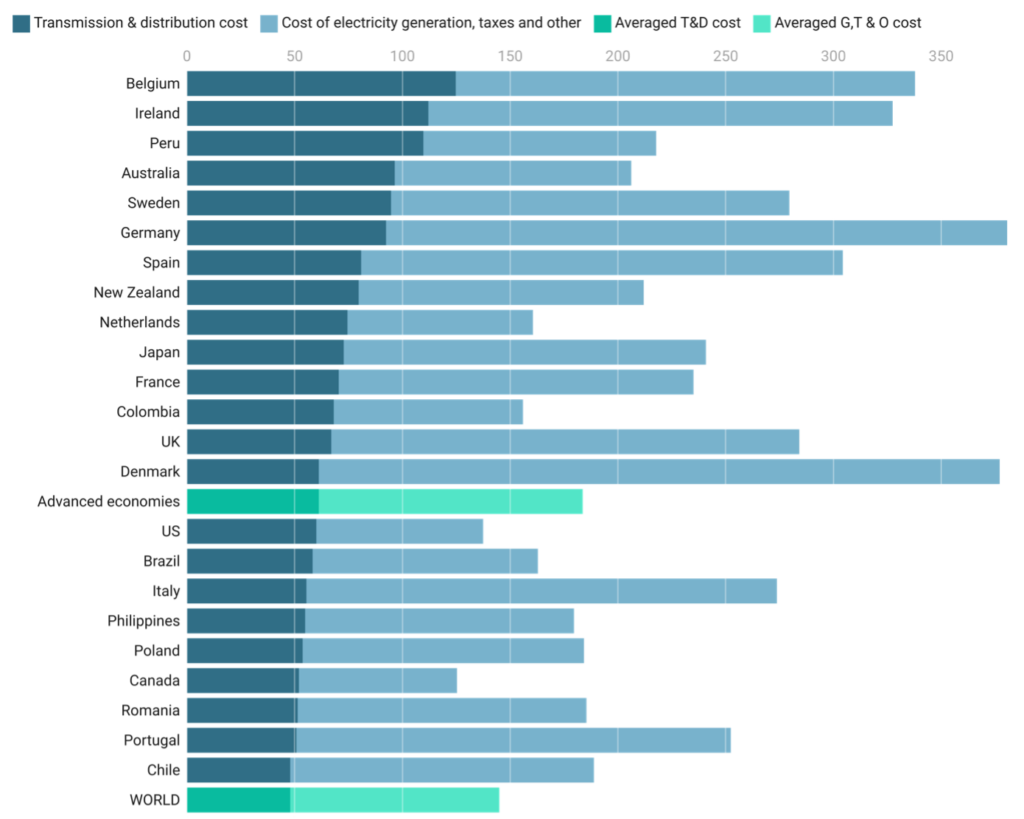
Figure 2: Figure by Econopolis Strategy, data from IEA
Regardless of the historical factors contributing to high electricity tariffs in Belgium, this situation poses a significant challenge for the ongoing energy transition. It restrains societal willingness to accept even higher grid costs, which are indispensable to accommodate the surging demand for electric vehicles and the transportation of offshore wind power from the North Sea to the mainland. These costs will invariably find their way into the energy bills of consumers once these investments materialize.
In conclusion, the global electricity grid is a remarkable engineering achievement, serving as the lifeblood of our electrified world. However, to achieve our net-zero goals and transition to cleaner energy sources, we must invest significantly in grid upgrades and expansions. While this may exert pressure on consumer energy bills, it is an essential step towards a more sustainable and climate-friendly energy future. By facilitating the integration of renewable energy sources, such as wind and solar power, the upgraded grids foster a cleaner environment for people to live in. They reduce our dependence on fossil fuels, cut down harmful emissions, and pave the way for a greener, more sustainable energy landscape. In essence, these investments are a linchpin in our collective effort to combat climate change and create a healthier planet for current and future generations.
[1] The Announced Pledges Scenario forms a set of starting conditions for the IEA, and assumes that all aspirational targets announced by governments are met on time and in full; including their long-term net zero and energy access goals.