In the transition towards a sustainable future, clean technologies have emerged as beacons of hope in the global fight against climate change. However, behind the scenes of this technological revolution, hidden heroes known as critical raw materials (CRMs) play a vital role. These materials hold significant economic importance for the European Union (EU) yet face a high risk of supply disruption due to limited sourcing options and few substitutes. CRMs are indispensable to produce renewable energy systems, electric vehicles, electrolyzers, and various other clean technologies. Moreover, they are essential for advancements in digitalization, defense, and space technologies. These technologies all look to the future. However, CRMs are also crucial for life as it is today. For example, they are used in steel, electrical systems, and communication technology.
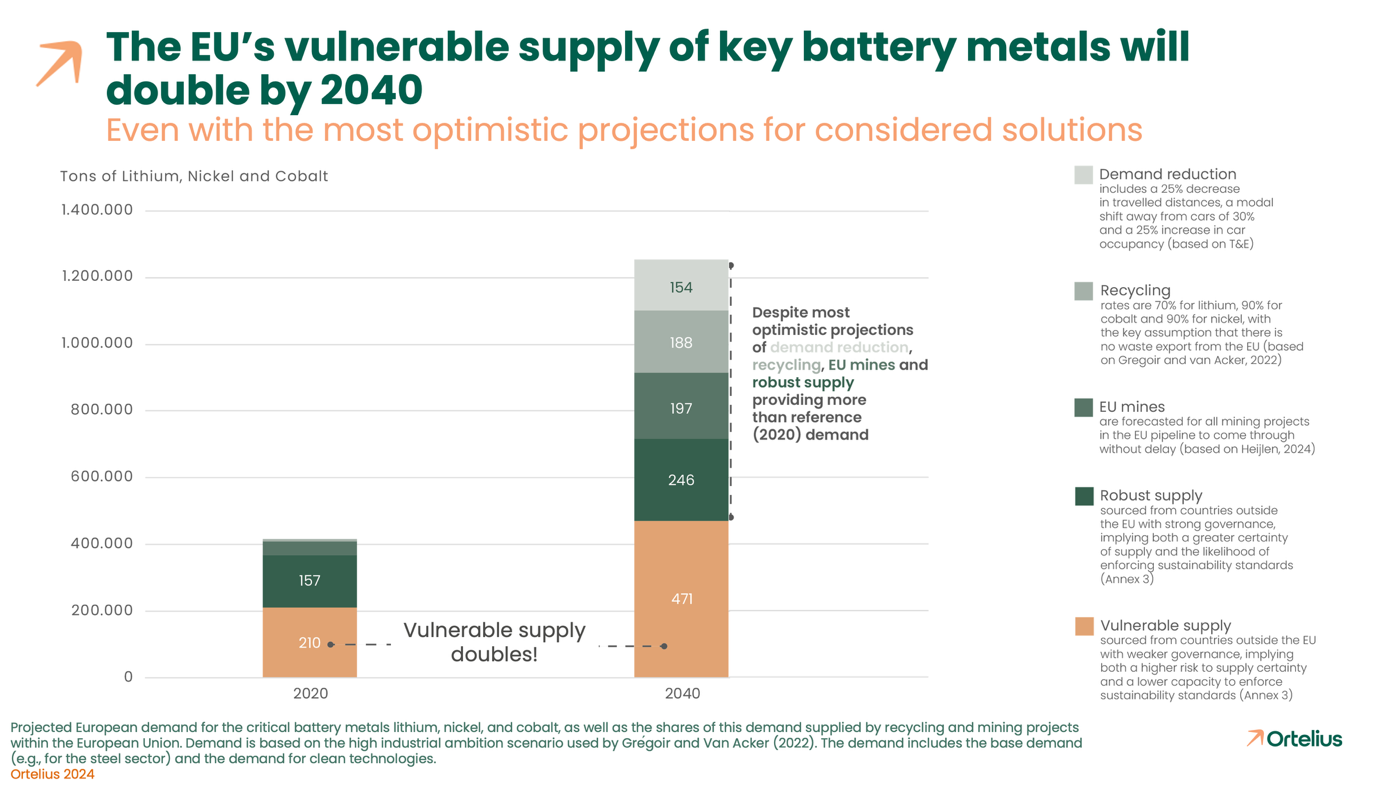
As the demand for clean technologies soars, so will the demand for CRMs. This escalating need has sparked concerns about the security of their supply chains, particularly in regions heavily reliant on imports, such as the EU. In response, the EU wants to achieve greater self-reliance and de-risk supply, aiming to reduce dependency on a handful of countries for CRM imports. This week’s adoption of the Critical Raw Materials Act (CRMA) by the Council of the EU marks a significant move towards ensuring a secure and sustainable supply of CRMs.
The CRMA establishes a list comprising 34 CRMs. For the EU’s annual consumption of raw materials, the CRMA sets forth ambitious benchmarks that are to be achieved by 2030:
- 10% from local extraction.
- 25% from recycled materials.
- 40% processed in the EU.
In addition to setting targets, the CRMA also streamlines the permitting process by requiring member states to have single points of contacts for administration and establishing deadlines to expedite extraction and recycling projects. It also requires supply-chain risk assessments to get a better view on dependencies.
The CRMA represents a crucial first step in mitigating supply risks for extraction and recycling projects. By fostering policy dialogue and facilitating collaboration among stakeholders, it paves the way for coordinated actions to ensure a stable CRM supply. Moreover, the CRMA promotes investment in the mining sector, driving innovation in extraction and processing technologies to enhance efficiency and minimize environmental impact.
Econopolis Strategy is currently crafting a position paper on CRMs and the CRMA, shedding light on overlooked aspects of this crucial legislation. Stay tuned for further insights!