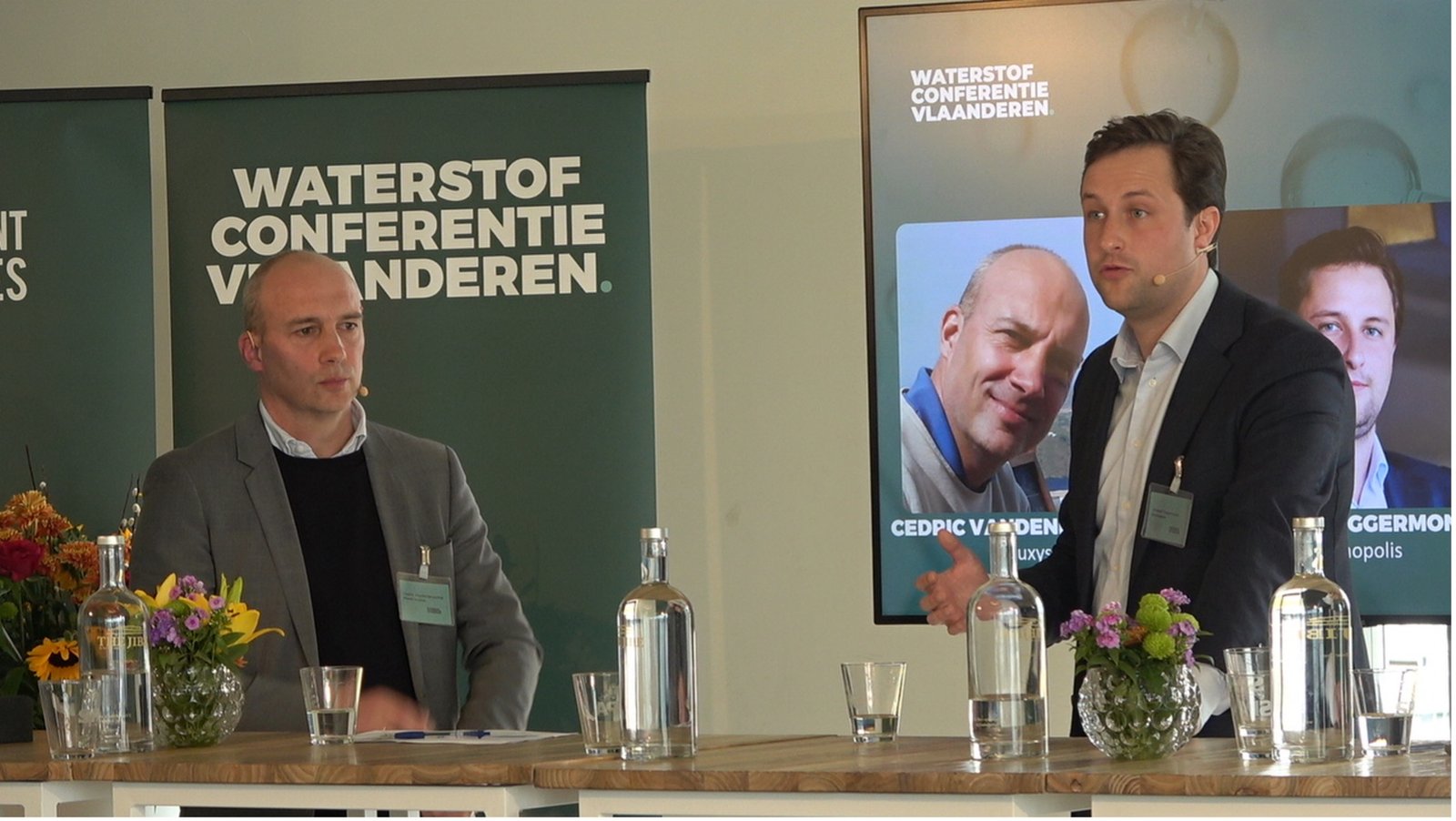
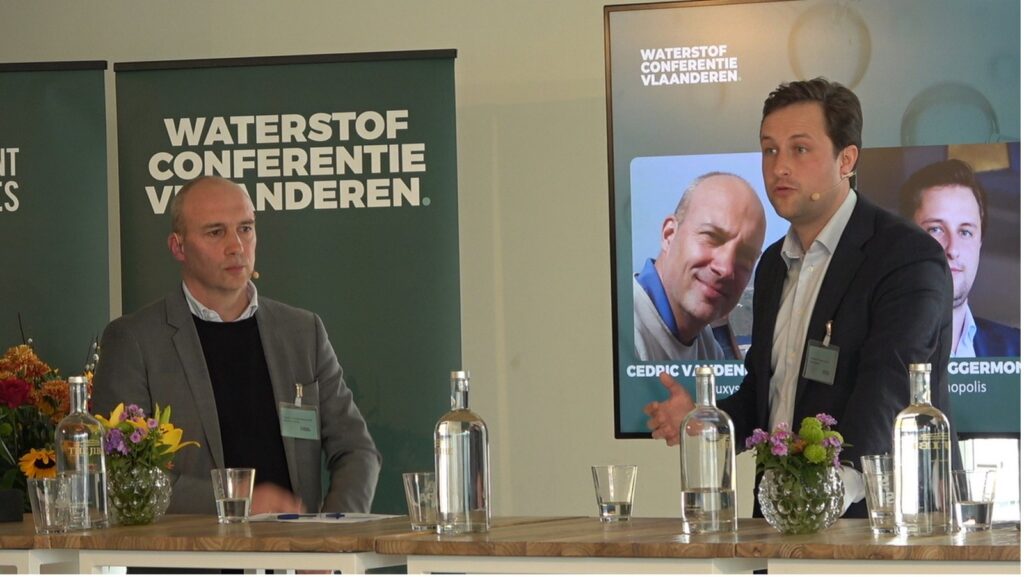
Econopolis attended the Flemish Hydrogen Conference on April 20, 2023, and participated in the debate on the strategic role of hydrogen in our industry. How will we source our hydrogen needs? Will the importation of hydrogen lead to new energy dependencies that will make us vulnerable? What are the major bottlenecks today for a large-scale rollout of hydrogen in our industry? All questions that were topics on the panel.
Hydrogen is increasingly being pushed forward as an important climate solution, as fossil fuels can be replaced by hydrogen in a lot of applications. It can be used as a fuel in ships and aircrafts, as feedstock in the chemical sector, for steel production, and much more. It is important to note that hydrogen is an energy carrier: it does not occur as a resource on Earth, but it is packaged in larger molecules, such as methane or water. Before diving deeper, it is good to go over the main hydrogen colors:
- Gray hydrogen: Hydrogen produced from natural gas. Most hydrogen is generated this way.
- Blue hydrogen: This is the product of gray hydrogen production, combined with CO2 capture and storage.
- Green hydrogen: Hydrogen produced via electrolysis from renewable energy sources, such as solar and wind.
- Pink hydrogen: Hydrogen produced via nuclear-based electrolysis.
The EU’s hydrogen ambitions are enormous. Belgium and the EU have a stated preference for green hydrogen. While both the federal hydrogen strategy and the EU’s strategy keep the door slightly open for blue hydrogen, this is not reflected in the EU’s goals of 10 million tons of green hydrogen imports and 10 million tons of local production of green hydrogen by 2030. By comparison, production capacity last year accounted for 109,000 tons. That means the EU needs 100 times more local electrolysis capacity by 2030 to achieve its ambitions. Capacity yet to be licensed and built.
In Belgium and the Netherlands today, we consume a total of 1.75 million tons of gray hydrogen. This is mainly used in our industry: to make fertilizer, in refinery processes and to produce methanol. If we were to replace just this gray hydrogen with green hydrogen, we would need about 90 terawatt hours of green power per year. The total power consumption of Belgium and the Netherlands is about 210 terrawatt hours. That means we would have to increase our current power production by almost 45 percent if we wanted to green these applications alone. And we are not even talking about new hydrogen applications.
We do not want to send a negative message. However, it is important to take the following three messages seriously if we want to realize our hydrogen ambitions:
- Hydrogen will be a scarce resource in the coming decades, so we need to use it smartly.
- Large-scale imports are inevitable but will not necessarily be a problem. Unlike fossil fuels, every country can enjoy the energy coming from the sun and the wind. That will lead to less political manipulation and more balanced energy relations.
- We are going to need all clean forms of hydrogen. We have a lot to lose if we get too dogmatic about certain colors at this stage. Incentivize the production of all kinds of clean hydrogen, such as blue and pink hydrogen.
Hydrogen faces two major challenges in the coming years: 1) we must make the current production climate-neutral and 2) the production capacity must expand enormously. Therefore, if we want to bring hydrogen to scale in the coming years, we must be open to all forms of low-carbon hydrogen. Otherwise, we risk jeopardizing the pace of development of this sector. And that would also be pernicious for green hydrogen.We are well-positioned as a region to build a successful hydrogen ecosystem and become a technological pioneer. The US, with its Inflation Reduction Act, is now also jumping on the hydrogen train in full force. If we lose our lead position, hydrogen hubs will be developed elsewhere in the world. We need to work on infrastructure, legislation, and new hydrogen deals with solar and wind-rich countries. The next few years will be decisive.