In the fight against climate change, every action matters. That’s why extensive research is being conducted on “mitigation strategies” aimed at reducing the harmful impact of carbon emissions on global warming. It’s a well-known principle in our philosophy that there is no silver bullet solution, so we advocate for keeping all technological options open on the path to achieving net-zero emissions.
One fascinating avenue worth exploring, is to turn to ‘natural processes’ that can remove carbon from the atmosphere, without human intervention. While most people are familiar with the role of plants and trees in absorbing CO2 through the biological process of photosynthesis, there is a lesser-known family of processes called “enhanced weathering” that can be deployed on certain minerals and rocks. Weathering refers to chemical erosion processes, where the molecular structures of minerals are altered when being exposed to carbon from the atmosphere, allowing them to absorb carbon and form stable carbonate minerals. Olivine, a mineral named for its olive-green color, is particularly noteworthy in this regard. It is one of the more intriguing minerals chosen for this type of process. Astonishingly, conservative estimates indicate that just one tonne of finely ground olivine can store an equivalent amount of CO2 – roughly equivalent to the emissions from taking a plane for a two-person citytrip to the beaches Barcelona. This makes olivine a highly valuable tool in our pursuit to removing CO2 from the air.
However, there is a challenge to overcome. While a tree can store one ton of carbon in a couple of decades (depending on the tree species), olivine takes ten times longer to achieve the same result. To address this, ongoing research aims to ‘enhance’ the olivine carbon-capturing process, making it more efficient. This can be achieved by grinding the mineral into finer grains, increasing its surface area for greater exposure to the air. Additionally, spreading it in areas that undergo frequent movement, such as beaches, can expedite the process. Although this industry is still in its early stages, it holds immense promise once subcommercial companies demonstrate the feasibility of this technique.
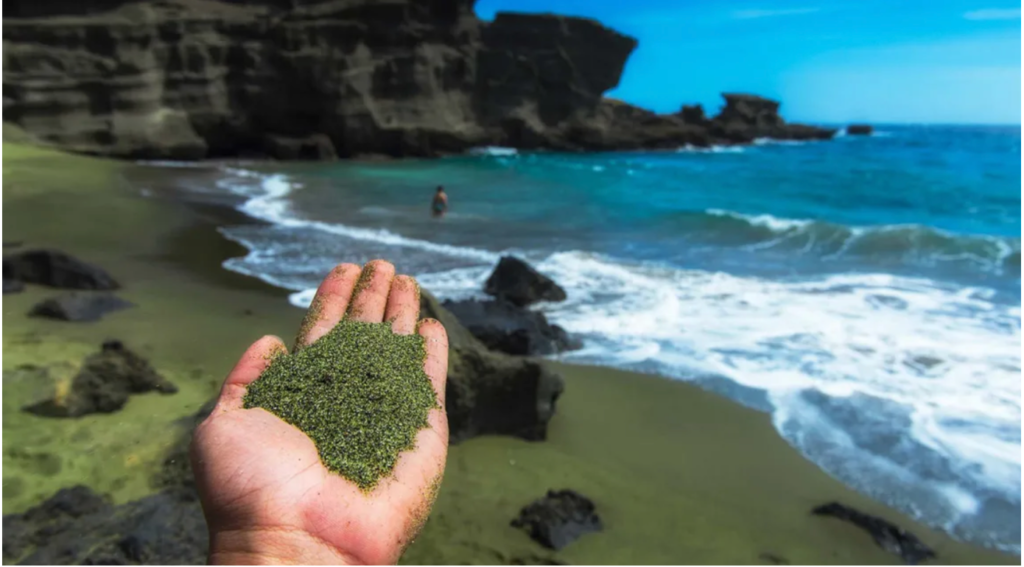
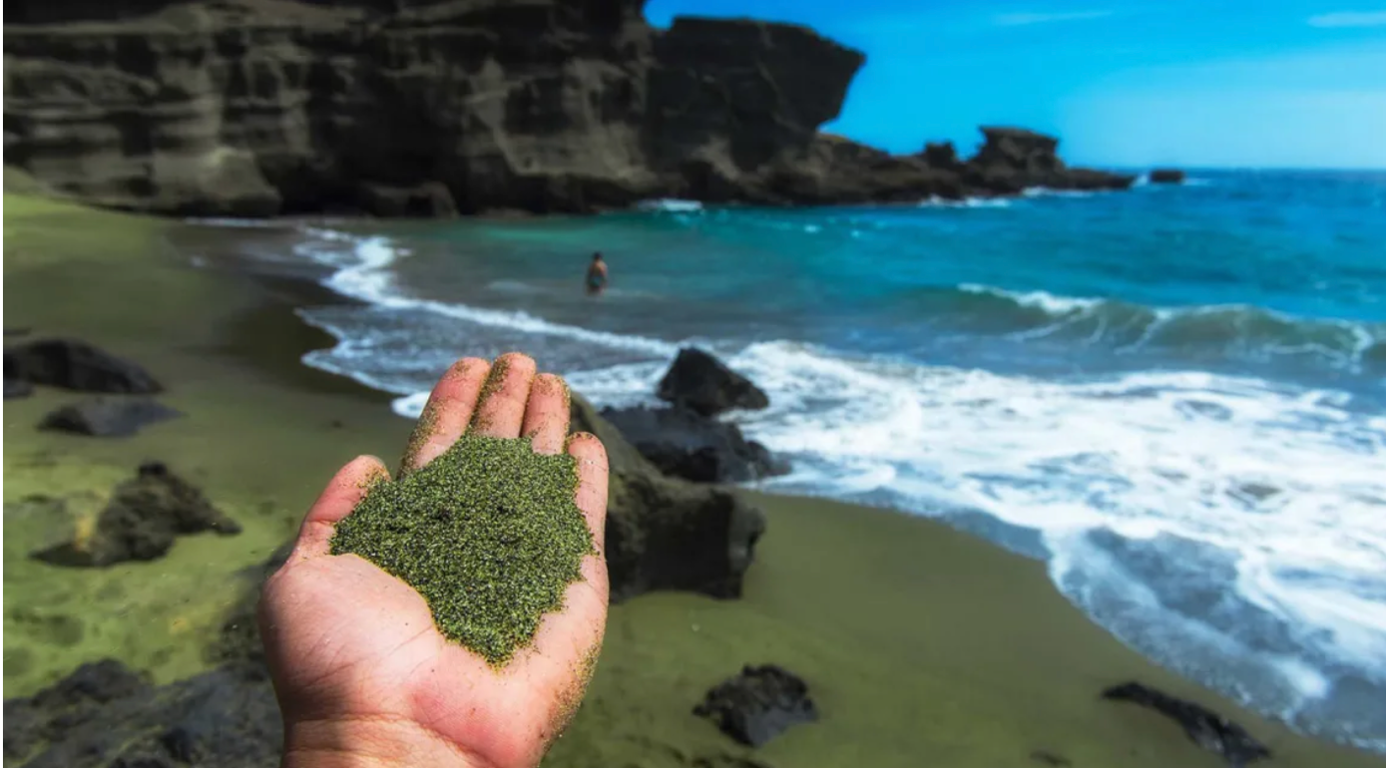
Figure 1: A green beach supplied with olivine grains. Source: Project Vesta
One noteworthy example is the company Vesta, which has conducted experiments with olivine grains that are dispersed on beaches in the United States. Their efforts have transformed the North Sea Beach in New York State into captivating landscapes of green beaches. Currently, they are investigating the potential impact on water and soil quality to ensure there are no adverse effects on marine ecosystems. If the results prove positive, this could open up a range of possibilities for enhancing beach and land areas. Moreover, Belgium has significant expertise in this research field. The Coastal Carbon research group, a collaboration between UA, UGent, and VLIZ, is actively investigating this domain. This advancement aligns with the growing trend of ecotourism, offering exciting prospects for image enhancement and sustainable tourism experiences. Perhaps, in a couple of years you may even stumble upon a green beach during that next citytrip to Barcelona!