Water is commonly known as the source of life, so much that scientists are looking for it on distant planets to claim the possible existence of extraterrestrial organisms. The important role and value of water on Earth however, is often overlooked. But with large socio-economic dependencies on water, increased demand and the economic impact of disaster weather, the notion of ‘water security’ finally starts to take form. Combined with profitable investment opportunities, new technologies and policies are surging.
The source of water
Water comes in many forms, but only freshwater is accessible and usable for human use. It represents 2,5% of the total water available on earth, with only 1,2% of this freshwater being surface freshwater. 79% of the surface freshwater is stored in ground ice and permafrost, which makes it not immediately available for human use. The total raw water on earth dwarfs reliable and accessible water. Luckily, the hydrological cycle makes water a renewable resource, connecting the immense potential of all the raw water to the valuable surface freshwater.
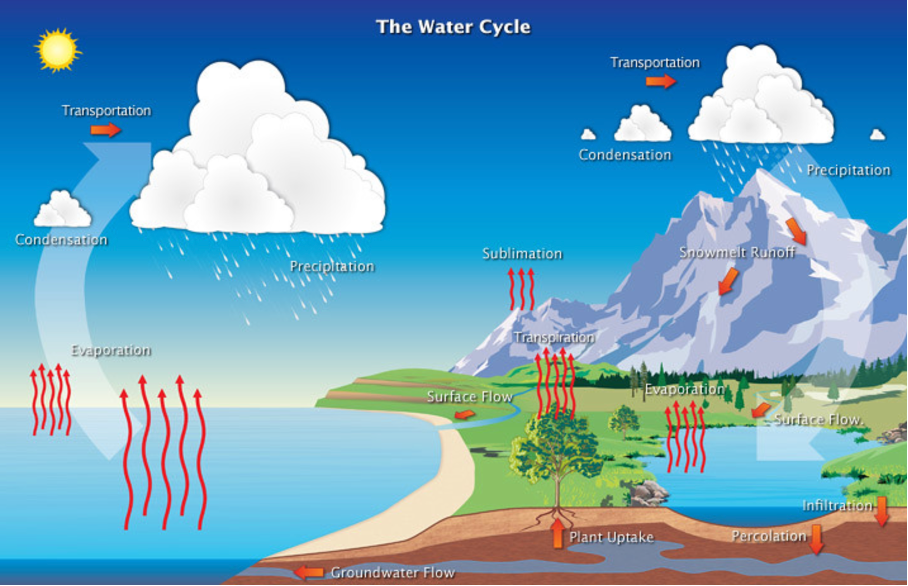
Water in oceans, soils, snow and ice evaporates to the atmosphere in gaseous form. Adding the transpiration of water through leaves of plants, the total evaporation is known as evapotranspiration. The water vapor subsequently condensates in the atmosphere and is released back to the earths surface through precipitation. Which is then redistributed by returning to the atmosphere through evaporation, by being intercepted by vegetation, by infiltrating soil and groundwater reservoirs or by flowing directly into the sea as surface run-off. Ice sheets, glaciers and snow also contribute to the latter. Water sources that are non-renewable are either disconnected from this everlasting cycle or need a long time to be replenished.
Climate change
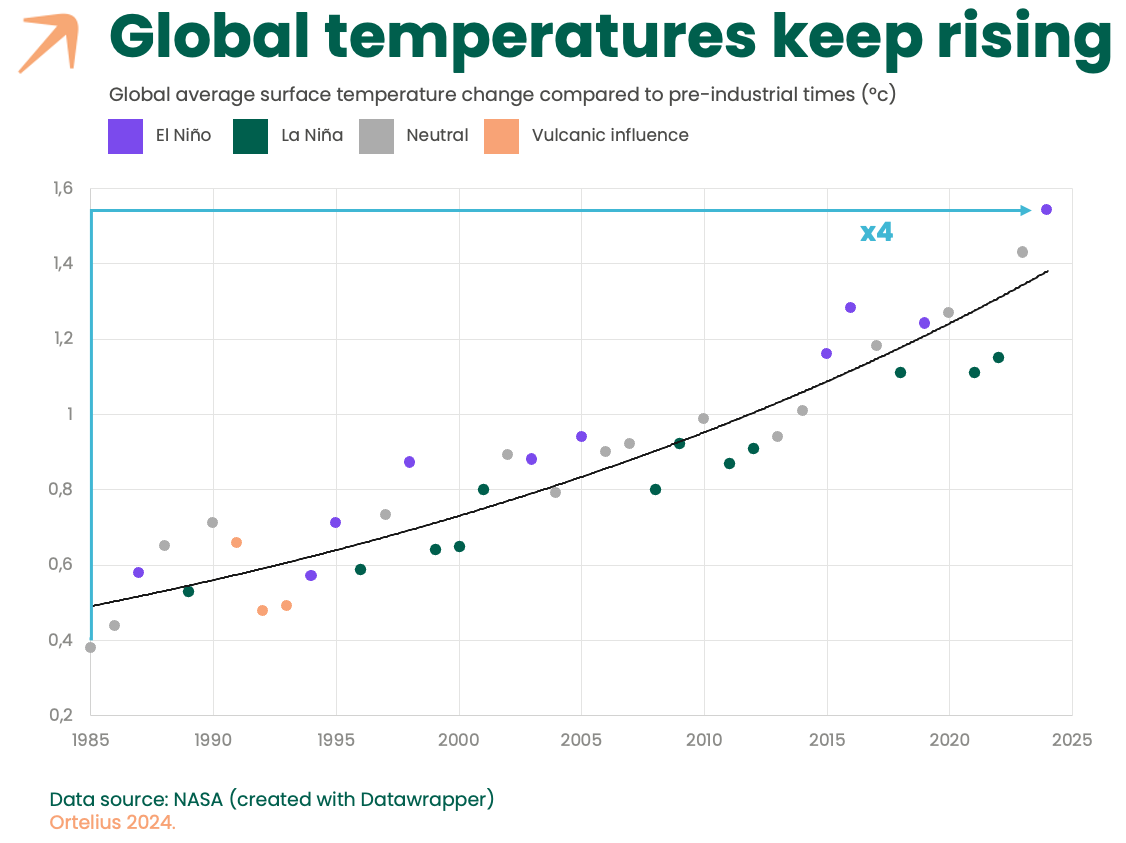
Climate change can have a lasting and potentially irreversible effect on hydrological processes. The most known, is the size reduction of glaciers. They lose more than 0.5 cubic meters of water equivalent per year on average, globally. This influences the seasonality of water stream flows and recharge levels in basins that depend on glacial melt. In the European Alpine region for example, glacier coverage is 50% lower compared to the mid 18 hundreds. Water resources are highly affected by the increased temperatures because of elevated rates of evaporation and decrease in surface run-off potential of glaciers. A warmer atmosphere is also able to hold more moisture, which in turn increases global precipitation and changes monsoon patterns. The increased amounts of CO2 in the atmosphere hampers plant transpiration, leading to structural impacts on soil and air moisture, surface temperatures and water run-off. Rising temperature clearly has a compounding effect on water shortage risk; it elevates the demand and hinders the supply. Although climate change is a worldwide phenomenon, the effects of climate change on the water cycle are location specific. The northeastern part of Europe is expected to have an increase in water availability, while southwestern part is likely to experience decreases. Finally, climate change will induce more frequent extreme water-related hazards and weather events such as extreme rainfall or droughts, hurricanes and cyclones.
In Europe, economic damage from droughts is estimated to range from EUR2bn to EUR9bn annually, before considering the unquantified impact on ecosystems and their services. Southern Europe is the most severely affected region, with around 30% of its population residing in areas facing permanent water stress and up to 70% in areas with seasonal water stress during summer.
Water consumption and quality
For millennia, humans have become highly dependent on the water cycle with the demand for freshwater use increasing sixfold in the last century alone. The main contributors of water abstraction are agriculture (72%), industries (16%) and municipalities (12%). Water consumption is a narrower definition of water use and represents the portion of water that is not returned to the water source from which it was withdrawn. This can be caused by evaporation or integration into a product, animal or plant. This is a key difference between the previous main water abstractors. Agriculture has a high-water consumption level compared to its water use, while industries and municipalities have a rather low water consumption level. This is because the latter can count more on water reuse possibilities.
Agriculture accounts for 58% of water consumption, electricity production for 18%, households and services for 13%, and mining, quarrying, construction, and manufacturing for 11%.
Water consumption puts the hydrological cycle under great pressure because over-use of water sources makes them become non-renewable.
Besides the need for sufficient amounts of water, the quality of water also has to reach a certain standard to be useful. The Water Impact Index quantifies the potential damage to water quality caused by socio-economic activities, with fossil fuels, materials and apparel rated highest. In 2020, only 60% of the world’s monitored water bodies have been assessed as having good ambient water quality, and 58% of the world’s domestic wastewater was safely treated in 2022.
Water security
In order to combat these difficult challenges regarding water, the European legislation adopted under the EU Water Framework Directive sets a regulatory framework that focusses on ‘Water security’. This describes a condition whereby water is available and accessible in sufficient quantity and quality to ensure sustainable livelihoods, health, socioeconomic development, and political stability. The OECD Council of Water therefore recommends maintaining acceptable levels of risk across four water threats:
- Risk of shortage: insufficient water for environmental and socio-economic purposes.
- Risk of inadequate quality: Water is not of suitable quality for a particular purpose.
- Risk of excess: overflow of the normal confines of a water system, or the destructive accumulation of water over areas that are not normally submerged.
- Risk of freshwater systems degradations: Surpassing the hydrological and biological capacities of surface and groundwater bodies.
Some interesting notions and focus points in the regulatory framework are listed below:
Water utility life cycle
To optimally capitalize on the value water, a sustainable usage cycle is needed. The framework provides 6 steps for the utility life cycle of water. First, the water is abstracted form rivers and aquifers. The water becomes clean at the water treatment works. A network of pipes delivers the water to costumers, homes and businesses. Installed smart meters give more control over the water use. This wastewater is then removed and treated at sewage treatment works, while generating electricity. The clean water is safely returned to the environment to restart the cycle.
Price of water
Investment in solutions that will ensure water security are imperative and the price of water should reflect that. In Europe however, the water prices in countries with the greatest water supply needs are lower than the overall average paid by their neighbors. The reality is that municipalities with restricted budgets will continue to underinvest in assets, influencing their prices and quality of service. This limited government funding gives opportunities for public-private partnerships (PPP) bringing both technology and efficiency to specific water needs. Once tariffs can be revised upwards to reflect true operating costs, the sector should reach in tipping point in terms of profitability. No timeframe for the evolution is yet determined.
France’s renewed water plan takes these notions to heart. After recent droughts in summer of 2022 and March 2023, French president Emmanuel Macron announced a water plan in which a progressive tariff mechanism linked to water utilization rates is put in place, together with a financing plan to support municipalities and sectors to reduce leakages within the potable water network. This might inspire other countries to follow suit, giving France a competitive technological advantage on tenders.
Water reusability
Only around 15% of the water used in Spain is reused water, and only about .2% in France. Compared to countries like Israel with 89%, Europe still has a long way to go. The main restricting factor is the need for implementation at the local level, combined with permission and authorization constraints that can take up to 10 years. Nevertheless, it shows opportunities for countries to transfer their knowledge about surviving in severe weather conditions, since they have been subjected to it for centuries, long before climate change.
Infrastructure enhancements
Another important aspect in guaranteeing water security is the upgrade of certain infrastructure, like sewerage systems. High stress is placed on these systems due to climate change, population growth and larger urbanized areas. Overflows are needed to ensure that excess rain and wastewater is discharged into rivers or seas. But by doing so, the quality of these waters will reduce. Solutions to this problem range from complete separation of sewer networks to sustainable drainage systems that slowly filter rainwater back into the natural environment.
Other needed advancements in infrastructure are for example the need to reduce or locate leakages. Digital tools can be deployed like listening rods and ground microphones, enhanced with machine learning technologies. This will reduce non-revenue water, which in turn has a high impact on possible investments. Again, countries investing in these solutions will have first mover advantage.
Set the example
Many believe we are at the cusp of an upcoming investment trend towards increases water security. According to The State of Global Water Resources 2022, more and more countries are funding research to understand the mechanism of water better. Combining the strength of knowledge about water over different nations and continents, will give us the best chance towards water sustainability.